
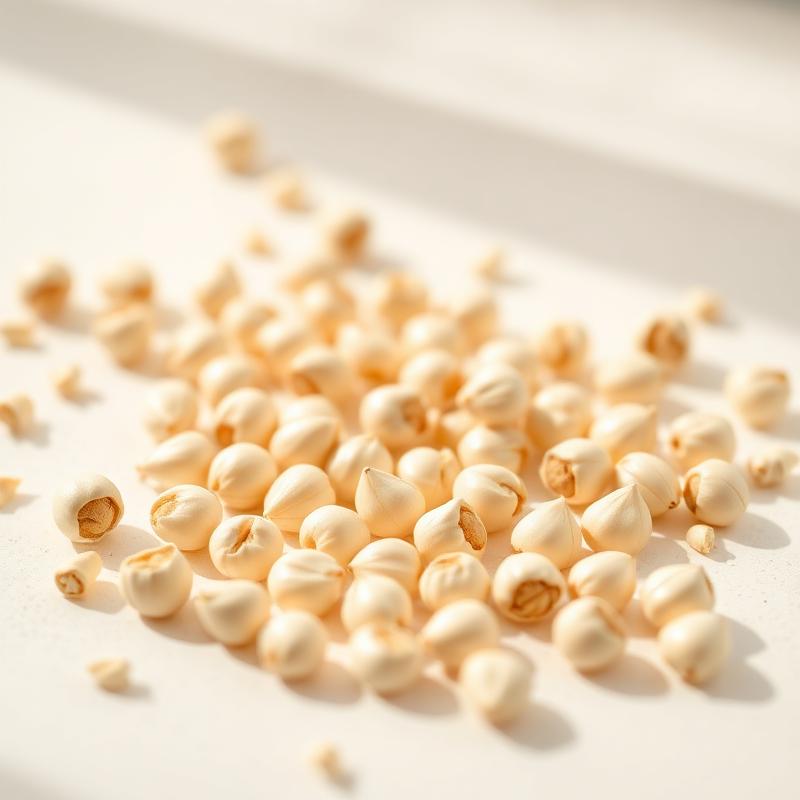
Size
22–24 mm
6+ suta pops, screened for consistency so a pack looks uniform on shelf.
Premium grades
Large, uniformly white, intact pops with under 1% breakage. The grade you specify when the pack sells on appearance and the buyer is paying for it.
Premium is not a marketing word here. Each attribute is measured and written into the specification sheet attached to your purchase order.
Size
6+ suta pops, screened for consistency so a pack looks uniform on shelf.
Colour
No scorching, greying or yellowing; optional optical colour sorting.
Integrity
Hand inspection removes halves, shrivels and half-popped seeds.
Texture
Controlled roasting and low moisture deliver a clean snap, not a chew.
| Attribute | Premium 6+ suta | Standard 3–4 suta |
|---|---|---|
| Pop diameter | 22–24 mm | 14–20 mm |
| Broken content | Under 1% | 3–5% |
| Sorting | Machine + hand + colour sorter | Machine graded |
| Yield from raw seed | Low | High |
| Best channel | Gifting, luxury retail, HORECA | Mainstream snacking, ingredients |
Gifting
Multi-flavour assortments with inner trays, ribbon closures and foil-stamped sleeves for festive and corporate gifting.
Retail
Clear jars that showcase pop size, or matte pouches with spot UV for speciality food retail.
HORECA
Portion sachets for lounges and airlines, and 1 kg catering packs for hotel kitchens and bars.
Short, direct answers to the questions we get most often from importers, distributors and brand owners.
Mithila, the region spanning Darbhanga, Madhubani, Purnia and Katihar in north Bihar, has the shallow warm ponds that fox nut cultivation needs, and generations of families who know how to temper and pop the seed by hand. Mithila Makhana holds a GI (Geographical Indication) tag, which is a legal origin protection much like Champagne or Darjeeling tea. In practical terms the region's seed pops larger, whiter and crisper, with fewer broken pieces and a cleaner taste — which is exactly what a retail pack or a snack line needs.
Because we behave like a manufacturer, not a middleman. You get the same grade in every container because lots are bought against a written specification and checked before packing, not sorted after complaints. You get complete export paperwork — invoice, packing list, certificate of origin, phytosanitary certificate, lab report — prepared in-house rather than outsourced. And you get one point of contact who knows your market's labelling rules, so the shipment clears customs instead of sitting at the port.
Bulk shipments go into food-grade laminated or PP bags with an inner LDPE liner, usually 10 kg or 20 kg per bag, palletised and strapped. Because makhana absorbs moisture, we dry to 5–7% moisture and can add nitrogen flushing or vacuum packing when the transit is long or the destination is humid. Retail packs are made in metallised or transparent laminate pouches from 20 g to 500 g, with zip-lock, stand-up or pillow formats, printed to your artwork with your market's mandatory labelling already in place.
Four measurable attributes: pop diameter (6+ suta), uniform whiteness with no scorch marks, broken content under 1%, and low moisture that delivers an audible crunch. Everything else is presentation.
After machine grading by size, lots are hand-sorted on inspection belts to remove discoloured, shrivelled, half-popped and broken pieces, then colour-sorted where the buyer specifies it.
Hand-sorted 6+ suta typically carries a meaningful premium over 3–4 suta because yield per quintal of raw seed is much lower. Exact differential depends on crop year and volume.
Gifting and festive channels, luxury and speciality retail, hotel and airline catering, and premium own-label ranges in the Gulf, Europe, North America and Southeast Asia.
Yes — PET jars, rigid gift cartons, multi-flavour sets and printed pouches with premium finishes such as matte lamination, spot UV and foil stamping.
We courier graded samples with the matching specification sheet and lab report so your team can assess size, colour and crunch before committing.